
Building strong connections in telehealth therapy is essential for effective treatment. Virtual sessions can feel distant without intentional effort, but research from 2023 shows that rapport in teletherapy can match in-person sessions when therapists adjust their approach. Here’s how you can create meaningful connections online:
- Set up reliable technology: Use HD webcams, dedicated microphones, and stable internet to avoid technical issues that disrupt communication.
- Create a professional environment: Ensure good lighting, a clean background, and minimal distractions to maintain focus and privacy.
- Improve nonverbal communication: Position the camera to show your face and gestures, exaggerate expressions, and narrate off-screen actions to maintain engagement.
- Use reflective listening: Rephrase what clients share to show understanding and validate their experiences.
- Personalize sessions: Tailor your approach to each client’s needs, preferences, and comfort with the virtual format.
- Address privacy concerns: Use secure platforms and suggest strategies like headphones or white noise to protect confidentiality.
Teletherapy requires adapting to virtual-specific challenges, but with the right tools and strategies, it’s possible to build strong, effective therapeutic relationships.
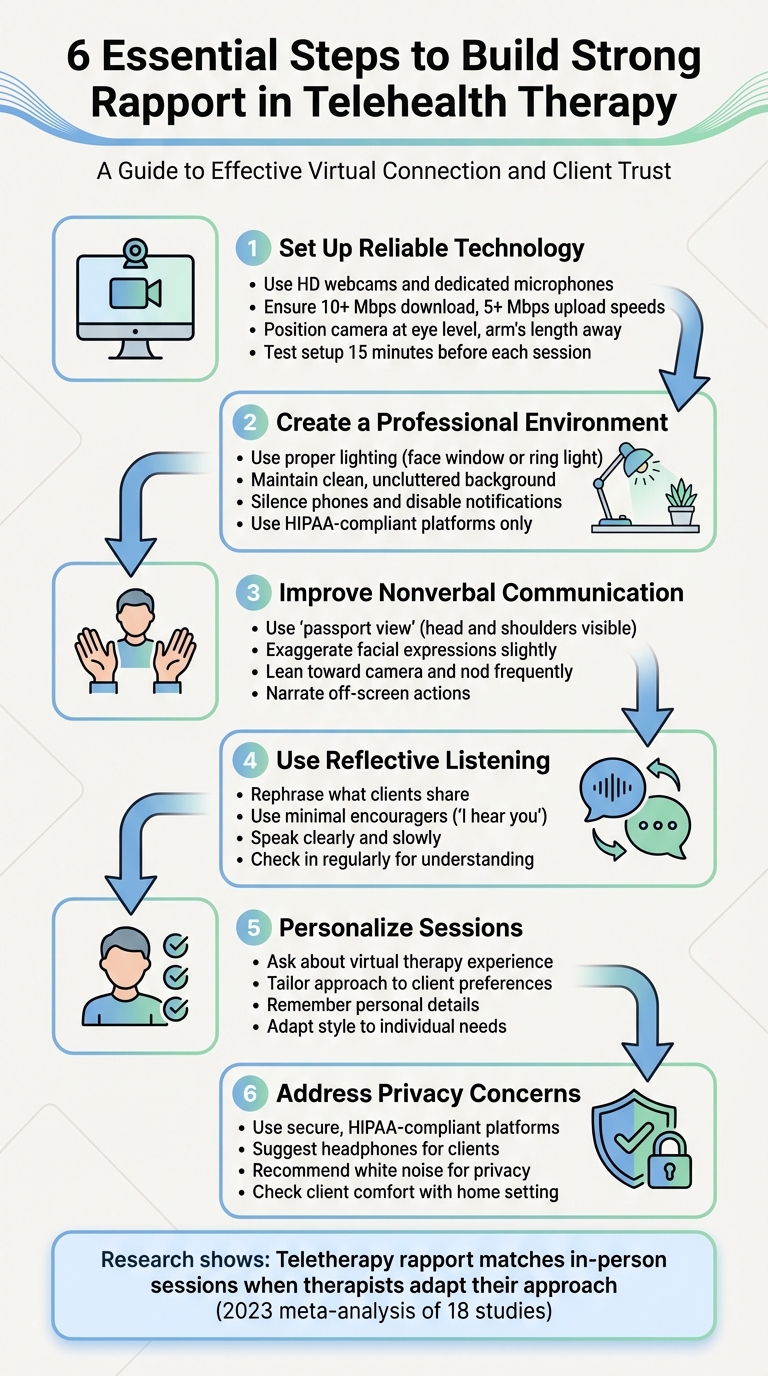
6 Essential Steps to Build Strong Rapport in Telehealth Therapy
Building Therapeutic Rapport in a Virtual Setting
sbb-itb-92e3c8f
Creating a Strong Foundation for Virtual Therapy Sessions
A smooth virtual therapy session starts with a solid setup. When technical glitches like frozen screens or garbled audio interrupt the flow, it can leave clients feeling disconnected or unheard. Considering that over half of American adults have explored online therapy, ensuring a seamless experience is crucial.
Setting Up Your Technology
The right equipment can make all the difference. Built-in microphones and webcams often fall short, compromising audio clarity and video quality. As Woody Schuldt, LMHC at Therapist Aid, points out:
Built-in laptop webcams and microphones are often low quality, making your image blurry, and your voice distorted. This can greatly affect the ability to read non-verbal cues.
To avoid these issues, invest in an HD webcam and a dedicated microphone. For a stable connection, aim for internet speeds of at least 10 Mbps for downloads and 5 Mbps for uploads. Whenever possible, use a wired Ethernet connection instead of Wi-Fi. Position your camera at eye level, about an arm’s length away, to replicate natural face-to-face interaction and allow clients to see your expressions and gestures.
Before each session, take 15 minutes to test your setup. Check your camera, microphone, and platform for any issues. Close unnecessary browser tabs, keep your device plugged in, and have a backup plan ready – such as a mobile hotspot, a secondary device, and the client’s phone number in case a switch to audio-only becomes necessary.
Even with flawless technology, the environment plays a key role in creating a professional and welcoming space.
Reducing Distractions and Protecting Privacy
Your surroundings set the tone for the session. A consistent, clean, and uncluttered space creates a professional "virtual office" feel. Proper lighting is essential – position yourself facing a window or use a ring light to eliminate shadows that might obscure your expressions. Silence your phone and disable computer notifications to maintain focus.
Privacy is a shared responsibility between therapist and client. Always use HIPAA-compliant platforms, as common options like Skype or FaceTime don’t meet the necessary privacy standards. If you’re in a shared space, tools like white noise machines or fans outside the door can help prevent eavesdropping. Encourage clients to take similar steps, such as wearing headphones, scheduling sessions when others are out, or using white noise to mask conversations. Woody Schuldt offers this advice for clients concerned about being overheard:
If your clients fear that a family member might hear them through the door… suggest closing the door, and using something to create noise (e.g., white noise audio found online, a loud fan).
Communication Techniques for Online Therapy
When it comes to online therapy, improving communication is key to fostering meaningful connections. Research highlights that therapists’ nonverbal emotional expressiveness strongly influences how skilled and effective they are perceived to be in teletherapy settings. Encouragingly, a 2023 meta-analysis of 18 studies found no significant difference in therapeutic rapport ratings between teletherapy and in-person therapy.
Improving Nonverbal Communication on Screen
Online therapy limits physical cues, but you can make up for this by emphasizing visible expressions. Position your camera for a "passport view" (head and shoulders) so clients can see not only your face but also your hand gestures and body language. When your client speaks, lean slightly toward the camera and nod frequently – these small actions show active listening and replace the physical energy of in-person interactions.
Consider slightly exaggerating your facial expressions and vocal tones. As Tao Lin, PhD, explains in Counselling and Psychotherapy Research:
Therapists and trainees should enhance their non‐verbal emotional expressiveness by exaggerating non‐verbal behaviors to ensure that their emotional messages are successfully and fully conveyed to clients.
If something happens off-screen, narrate it to avoid any misunderstanding – clients might otherwise see it as distraction. Be cautious with pauses, as what feels like a therapeutic silence in person might come across as a technical issue online. Taking short breaks between sessions can also help you reset and stay fully present.
These adjustments to body language can lay a strong foundation for connection, but the words you use are just as important.
Using Words to Build Connection
Nonverbal communication sets the tone, but your words solidify the bond with your client. Combining deliberate physical cues with thoughtful dialogue creates a well-rounded approach to building rapport online. Reflective listening – rephrasing or summarizing what clients share – shows you understand and validates their feelings. Minimal encouragers like "I hear you" or "right" also signal that you’re engaged in the conversation. Jeremy Sutton, Ph.D., emphasizes:
The words and phrases we choose with clients in therapy express feelings we want to convey and therefore matter greatly. They have the power to significantly impact the therapeutic alliance and outcome.
Speak clearly and slowly, checking in regularly to ensure your client understands. Adjust your tone, volume, and articulation to maintain vocal nuance. Since you can’t rely on physical energy in the room, encourage clients to describe their feelings out loud. As Cynthia Grant, PhD, LCSW, explains:
When you can’t feel the energy in the room, it’s important to encourage clients to verbalize what they’re experiencing.
Start sessions with a bit of casual conversation to help clients ease into the online format. You can also ask directly about their experience with virtual therapy: "How do you feel working over the computer is going?" Addressing frustrations early prevents them from snowballing into disengagement. If misunderstandings arise, tackle them immediately – open communication helps maintain trust, even when technology creates a barrier.
Adapting Your Approach to Each Client
Clients experience telehealth in unique ways. A 2024 study revealed that teletherapy clients reported therapeutic alliances and clinical outcomes comparable to those in face-to-face psychotherapy. But achieving these results relies heavily on your ability to personalize your approach, treating each client as an individual rather than relying on a uniform method.
Working with Client Preferences
Start by asking clients directly about their virtual therapy experience. Simple questions like, "How do you feel about working over the computer?" or "Is there anything you’d like to adjust in our sessions?" can encourage open and honest feedback. Some clients may thrive with a more active, directive style to bridge the physical distance, while others might appreciate a slower pace with room for reflection.
Be mindful of client privacy. Avoid asking for home "tours" unless a strong sense of trust has been established. The fact that clients are in their own space rather than a therapist’s office can shift the dynamic, fostering a more equal, human-to-human interaction.
Tailor your approach to meet client needs. For example, children might engage better with digital games, while parents may appreciate brief but meaningful small talk. Always check whether clients feel they have the privacy to speak freely and ask how comfortable they are with your virtual presence in their home.
Beyond individual preferences, it’s also essential to consider how a client’s cultural background shapes their expectations and experiences.
Addressing Cultural Differences
Cultural context plays a significant role in shaping therapy expectations, communication styles, and trust. Yet, research shows that many therapists miss opportunities to address these factors. In a survey of 689 APA-licensed psychologists, fewer than half reported discussing cross-cultural issues with their cross-ethnic or racial clients. This represents a missed chance to strengthen the therapeutic connection. Instead of making broad assumptions based on a client’s cultural group, conduct a functional assessment to understand how their unique beliefs and experiences influence their symptoms and expectations.
Practice cultural humility by engaging in self-reflection, building the therapeutic alliance, addressing cultural misunderstandings when they arise, and approaching value differences with an open mind. For example, clients from hierarchical cultures might expect a more directive approach, while in other cultural contexts, direct questioning could feel intrusive or disrespectful. Instead of challenging the "validity" of a negative thought – which might seem like a critique of their belief system – invite clients to explore the "helpfulness" or "utility" of that thought.
When clients share experiences of discrimination or oppression, validate their feelings. Acknowledging these stressors can make clients more comfortable discussing sensitive topics. Additionally, incorporate cultural strengths into therapy. This might include recognizing resources such as religious practices, community support, or culturally specific coping strategies. For clients who are modest about identifying their own strengths, consider asking what others in their lives might say about their positive qualities.
As highlighted in Contemporary Family Therapy:
Validating clients’ voices and experiences is fundamental to building an alliance in telemental health therapy.
Keeping Rapport Strong Throughout Treatment
Maintaining a solid connection in telehealth requires consistent, thoughtful effort throughout the course of treatment. Unlike in-person sessions, building and sustaining rapport in a virtual setting involves intentional strategies to bridge the gap created by physical distance.
Building Trust Across Multiple Sessions
Establishing and maintaining trust in telehealth starts with recognizing the individuality of each client. Remembering personal details and weaving them into sessions helps clients feel seen and valued. This approach fosters a sense of authenticity and demonstrates that you genuinely care about their unique experiences.
Without the benefit of physical cues, it’s essential to communicate your actions clearly to maintain client engagement. For example, if you’re taking notes during a session, let the client know. A simple phrase like, "I’m jotting this down so we can revisit it later," can reassure them that you’re actively listening and engaged. These small verbal cues help bridge the silence and strengthen the connection.
It’s also important to periodically check in about how the virtual format is working for the client. Asking questions such as, "Are these online sessions meeting your needs?" or "Is there anything about this format you’d like to adjust?" can help address potential concerns before they grow into larger issues. Research involving 839 therapists found that those who adapted telehealth-specific techniques – like verbalizing emotions or exploring clients’ home environments – reported stronger therapeutic alliances and a greater sense of presence.
When unexpected interruptions occur, such as a pet appearing on screen or a connection glitch, address them openly. Cynthia Grant, PhD, LCSW, emphasizes:
If something strange or distracting happens, don’t ignore it – bring it into the experience.
Acknowledging these moments with warmth and humor can actually deepen the bond, turning potential distractions into opportunities for connection.
In addition to these interpersonal strategies, integrating digital tools can further enhance client engagement.
Using Digital Tools to Increase Engagement
Technology offers valuable ways to strengthen the therapeutic relationship when used thoughtfully. Features like screen sharing can help illustrate concepts with worksheets, images, or videos, while chat functions allow you to quickly share links or resources without disrupting the session flow.
When using these tools, be mindful of maintaining a sense of connection. For instance, position shared documents near your camera so it still feels like you’re maintaining eye contact. Narrate your actions – _“I’m pulling up a worksheet for us to review together” – _ to keep clients engaged during transitions. Research supports that therapists who feel confident using telehealth tools report stronger therapeutic connections and a greater presence during sessions.
However, technology should complement – not replace – the human element. A review found that 53% of sources highlighted the need for more education on telehealth etiquette and relational skills. This underscores the importance of pairing technical proficiency with genuine relationship-building efforts to maintain rapport throughout treatment.
How Empower Counseling Builds Rapport in Online Therapy

Personalized Care in Virtual Sessions
Empower Counseling takes a thoughtful approach to online therapy by tailoring its methods to fit the unique needs of each client. Drawing from established telehealth strategies, therapists focus on creating strong connections through specialized techniques like Acceptance Commitment Therapy (ACT) and EMDR. As Saxler et al. note, "Even in online treatment, the strength of the therapeutic alliance remains a robust predictor of positive outcomes – across orientations and modalities".
ACT sessions often center on helping clients identify their strengths and imagine their future selves, while trauma-focused EMDR incorporates interactive elements to make sessions engaging and impactful. By validating each client’s experiences and remembering personal details – such as their family dynamics, career challenges, or personal aspirations – therapists build a sense of authenticity and genuine care.
From teens managing anxiety to college students navigating life transitions or couples looking to strengthen their bond, Empower Counseling adapts its methods to suit each individual’s or couple’s circumstances. This personalized approach naturally extends to making therapy accessible and accommodating for all clients.
Accessible Online Therapy Options
Empower Counseling ensures therapy is accessible across Alabama with flexible scheduling and pricing. Individual sessions range from $150–$225, while couples therapy is priced between $200–$300, depending on the therapist’s licensure and experience level.
The virtual format offers unique advantages, allowing therapists to connect with clients in their home environments. This setting provides opportunities to engage with personal elements – like a client’s pets or décor – that help build rapport and make sessions feel more personal. Combined with expertise in evidence-based practices like ACT and EMDR, this flexibility ensures clients receive effective, high-quality care that fits into their lives, all while maintaining the strong connections essential for meaningful progress.
Conclusion
Building a strong connection is key to successful telehealth therapy. Studies indicate that clients engaging in teletherapy often experience outcomes on par with traditional in-person sessions when therapists adjust their methods to suit the digital platform. The therapeutic bond remains a powerful indicator of positive results, regardless of whether therapy happens in person or online.
Creating an effective "webside manner" takes intentional effort. Simple strategies like looking directly at the camera to mimic eye contact, using clear and expressive nonverbal gestures, and narrating actions that might otherwise go unnoticed can help close the digital divide. For example, when therapists explain they’re jotting down notes, it reassures clients and fosters a sense of being heard rather than ignored. These small but impactful techniques make technology feel like a bridge rather than a barrier.
Using technology wisely can further enhance the therapeutic experience. Incorporating features like screen sharing, interactive exercises, or even acknowledging aspects of a client’s home environment can help build a more personal connection. Regularly checking in about how the online format is working also keeps clients engaged and shows that their comfort and feedback matter.
With teletherapy now making up 13–17% of healthcare visits in the U.S., mastering these approaches is no longer optional. From setting up an effective virtual space to refining communication techniques, the strategies outlined here offer a practical guide for fostering genuine therapeutic relationships online. When applied consistently, these methods ensure that the care and connection provided through teletherapy are just as impactful as in-person sessions.
FAQs
What if my internet or video keeps cutting out during therapy?
If your internet or video connection drops during a therapy session, there are a few steps you can take to fix the issue. Start by checking your device and internet connection. Make sure your Wi-Fi is stable, and if possible, switch to a wired connection for better reliability. Ensure your device meets the platform’s technical requirements, and close any unnecessary apps or programs that might be using up bandwidth.
You can also improve your setup by choosing a workspace with good lighting, clear audio, and minimal distractions. This creates a better experience for both you and your therapist. Lastly, it’s always smart to have a backup plan, like a phone number to call in case of persistent technical issues. This helps keep the session on track, even if technology doesn’t cooperate.
How can I feel more connected to my therapist on a screen?
To build a stronger connection during telehealth sessions, try a few simple strategies. Start by maintaining eye contact – focus on looking at the camera rather than the screen. This small adjustment can make interactions feel more personal. Use attentive body language, like nodding or leaning in slightly, to show engagement and understanding. Also, set up a comfortable, quiet space free from distractions to help you stay focused.
Good video and audio quality can make a big difference, too. Clear visuals and sound ensure smoother communication, helping you feel more present and connected despite the physical distance. These small steps can significantly enhance the therapeutic experience in a virtual environment.
How can I ensure my telehealth session remains private at home?
To ensure privacy during telehealth sessions, pick a quiet, private spot where others can’t listen in. Always use secure, HIPAA-compliant platforms for your sessions, and make sure your devices are password-protected. Log out once the session ends to prevent unauthorized access.
Keep your software up to date and connect through a secure internet network. Clearing your browser’s cache regularly adds an extra layer of security. It’s also a good idea to avoid sharing devices or passwords with others. These precautions help safeguard your health information and maintain confidentiality.