The Truth, the Trap & the Way Out | Dr. Nilam Gada | TEDxYouth@LPHS
sbb-itb-92e3c8f
How ACT Helps Teens Respond to Thoughts and Urges
I feel like I have to reply right now.A substance-related text, story, or post can set off a fast chain: exposure, thought, feeling, urge, action. Wanting approval can make saying yes feel urgent, even when you do not want to use. The wish to belong is not a flaw, but it can pull you toward a choice you do not want to make. ACT helps teens notice urges and choose a response that fits their values. If substance use is recurring, hard to control, or causing withdrawal, seek a substance-use assessment and treatment. Practicing a pause means noticing the thought, feeling, and urge before acting.
Notice Thoughts Without Following Them
I need to fit in.After a group chat or post, try adding:
“I’m having the thought that I need to fit in.”This is defusion: seeing a thought as a thought, rather than a command. You do not have to argue with it or make it go away. Pause, feel your feet on the floor, and take one slow breath. Ask:
“What is this thought asking me to do, and what do I want to stand for?”The thought may stay. You can still choose a response that fits your values.
Allow Hard Feelings, Not Unsafe Pressure
I’m embarrassed to say no.In ACT, acceptance means allowing discomfort without letting it make the decision. After a DM, comment, or invite, practice:
“I can feel embarrassed and still say no.”You can mute a chat or contact a trusted adult while anxiety is still present. Acceptance does not mean approving substance use, tolerating coercion, or staying somewhere unsafe. Threats call for immediate protection. Suspected overdose or slowed or stopped breathing needs emergency help. In nonemergency moments, pausing gives you room to choose safety over approval without first needing the discomfort to pass.
You Are More Than Your Urges or Mistakes
I made a risky choice. Maybe that’s just who I am.One urge or mistake does not define you. A risky choice is something to repair, not an identity you have to accept. Write:
“I made a choice I regret,”rather than:
“I am a failure.”Choose a value, such as honesty or health, and take a concrete step that follows it. Tell a trusted adult what happened or ask for an assessment, even if shame or uncertainty remains. That pause creates room to recognize a choice point and set boundaries.
Use Your Values to Set Boundaries
I don’t want them to stop inviting me.When substance talk fills a group chat, going along can feel like a way to protect your place in the group. Fear of rejection is not a character flaw. Curiosity, loneliness, shame, and wanting relief point to needs; they don’t decide what you do next. Once you notice the urge to please, the next ACT step is to ask what kind of friend or person you want to be. That gives you room to choose a boundary that fits your values.
Choose What Matters Beyond Online Approval
I want to make my own choice.Name what you want to stand for: health, trust, friendship, independence, or self-respect. ACT helps you let those values guide your choice rather than someone else’s approval. Ask yourself:
Would I still choose this if nobody saw it?Values are directions you keep moving toward, not tasks you finish. They’re also different from rules someone else gives you: a value is something you choose.
Choosing independence may mean declining an invitation while still wishing you could belong.That discomfort doesn’t mean you chose wrong. ACT’s willingness practice means making room for the feeling while acting on what matters to you.
Set Boundaries With Friends
I want to keep the friendship without saying yes.A clear limit puts your values into action. A respectful friendship leaves room for different choices, so practice a brief response before the next message arrives:
“I’m not going to use, but I’d like to hang out another time.”You can care about your friend without taking responsibility for their choices or reaction. A boundary names what you will do, not how your friend must respond. If the pressure continues or becomes coercive, mute or leave the chat and tell a trusted adult.
Practice an ACT Pause and Choice Point
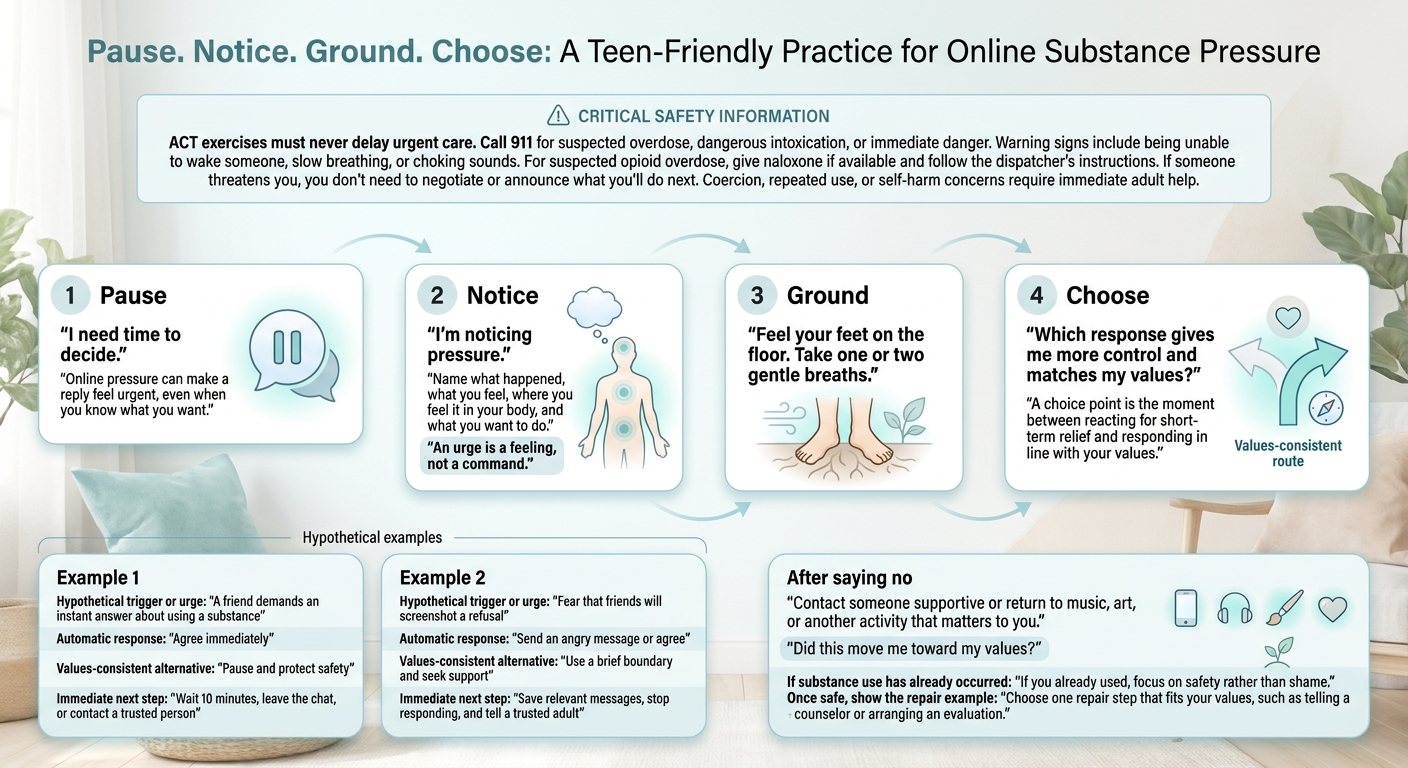
ACT Pause: Handling Online Substance Pressure
I know my boundary, but I still want to say yes.Online pressure can make a reply feel urgent, even when you know what you want. An ACT pause gives you space between the urge and your answer: pause, notice, ground, choose.
Notice the Trigger, Feeling, and Urge
My chest is tight. What if they screenshot my answer?After a DM, group chat, or post, name what happened, what you feel, where you feel it in your body, and what you want to do. Fear of screenshots, insults, embarrassment, or loneliness can push you to answer before you’re ready. Feel your feet on the floor. Take one or two gentle breaths, and say:
“I’m noticing pressure.”An urge is a feeling, not a command.
Choose Your Next Step Based on Your Values
I need time to decide.A choice point is the moment between reacting for short-term relief and responding in line with your values. Ask:
“Which response gives me more control and matches my values?”If someone threatens you, you don’t need to negotiate or announce what you’ll do next. In a chat or DM, that choice might look like this:
Hypothetical trigger or urge Automatic response Values-consistent alternative Immediate next step A friend demands an instant answer about using a substance Agree immediately Pause and protect safety Wait 10 minutes, leave the chat, or contact a trusted person Fear that friends will screenshot a refusal Send an angry message or agree Use a brief boundary and seek support Save relevant messages, stop responding, and tell a trusted adult
Cope With Hard Feelings After Saying No
I left, and now I feel cut off.Name the story your mind is telling about rejection without taking back your boundary. Contact someone supportive or return to music, art, or another activity that matters to you. Then ask:
“Did this move me toward my values?”If you already used, focus on safety rather than shame.
After Substance Use: Safety and Repair
I used. Now I’m scared to tell anyone.ACT exercises must never delay urgent care. Call 911 for suspected overdose, dangerous intoxication, or immediate danger. Warning signs include being unable to wake someone, slow breathing, or choking sounds. For suspected opioid overdose, give naloxone if available and follow the dispatcher’s instructions. Once you’re safe, try:
“I’m noticing the thought that I’m a failure.”With a trusted adult, name the trigger and what you needed in that moment. Choose one repair step that fits your values, such as telling a counselor or arranging an evaluation. Coercion, repeated use, or self-harm concerns require immediate adult help.
Get Help From Parents and Counselors
I keep getting pressured, and handling it alone isn’t working.You may have tried ignoring the DMs or leaving a chat, only to face the same pressure again. If pressure from chats, DMs, or posts, rising substance use, or stress is affecting school or friendships, bring in a trusted adult or counselor now. For crisis support, call or text 988. For immediate danger, call 911. Counseling should feel like shared skill-building, not punishment. Acceptance and Commitment Therapy (ACT) helps teens practice those skills with support. Families also need a plan for what to do before the next pressuring message arrives.
Make a Family Safety Plan Without Shame
I need help getting out, but I’m afraid you’ll be angry.When asking for help feels risky, a clear safety plan gives teens and parents agreed-upon steps to follow. Build it together: name warning signs, save 24/7 support numbers such as 988, and decide how to respond to pressure in DMs, group chats, or posts. The next step might be leaving the chat, sending a saved help message, or contacting a trusted adult. Keep the first response focused on safety. Parents should model the same device boundaries they expect teens to follow. For a teen with ADHD or other neurodivergent needs, ask what would make the plan easier to use. A saved help message, a visible reminder, or fewer steps may help. Before counseling begins, ask what happens in the first session and how much the teen needs to share. If your family wants ACT-based support, local counseling can help you put these steps into a plan.
Teen Counseling in Birmingham and Alabama
I want someone who understands the pressure, not someone who just tells me to stop.You can ask Empower Counseling whether its teen support fits your family’s needs, including help with online pressure, shame, and refusal skills. The practice offers ACT-based counseling for teens in Birmingham and through telehealth throughout Alabama. Services are private pay. A complimentary 10-minute consultation gives families time to ask about fit and fees.
Conclusion: Notice Pressure and Choose Your Response
“I feel like I have to reply.” ACT helps teens notice thoughts and urges without acting on them, make room for discomfort, and choose actions that match their values. Before replying, pause and name the urge. Then take one concrete step that protects what matters to you. If the pressure becomes unsafe, focus on protection, not debate. The goal is more room to choose while keeping your boundaries and staying connected to supportive people. If online pressure is leading to more use or distress, seek help promptly. Follow your family safety plan. Call 911 for immediate danger. For crisis support, call or text 988.FAQs
How can I practice ACT before online pressure happens?
“I want my days to reflect what matters to me, even when my thoughts get in the way.” Acceptance and Commitment Therapy (ACT) offers a way to practice this through daily habits that support psychological flexibility. Start by identifying your core values, such as health or relationships. Then choose small, measurable actions that reflect those values. Set aside 5 minutes each day for focused breathing or a body scan. When unhelpful thoughts arise, try saying “thanks, mind” to create some distance from them. Approach challenges as experiments you can learn from, rather than reasons to judge yourself.What if saying no costs me a friendship?
The fear of losing a friendship can make saying no feel risky. That fear is common, and it can be hard to carry when the relationship matters to you. Acceptance and Commitment Therapy (ACT) helps you work with it without setting aside your values. One ACT skill, cognitive defusion, asks you to name the thought:“I am having the thought that saying no will cost me this friendship.”This wording helps you recognize a thought, not a fact. Clarifying your values can then help you choose a response that reflects what you stand for, even while you feel anxious about how your friend might react.