“I meant to check one message, and now I’m still scrolling past bedtime.” Teen brains can get stuck on social media because developing self-control meets a strong pull toward peer approval and app features that encourage another check. Pew Research Center reports that 45% of U.S. teens say social media hurts their sleep. Here, I’ll look at what keeps that loop going and how <u>one small pause</u> can create room for a choice, without making checking a character flaw.
Supporting Adolescent Mental Health in the Digital Age | Social Media, Anxiety & Teen Well-Being
sbb-itb-92e3c8f
How teen development and app design drive checking
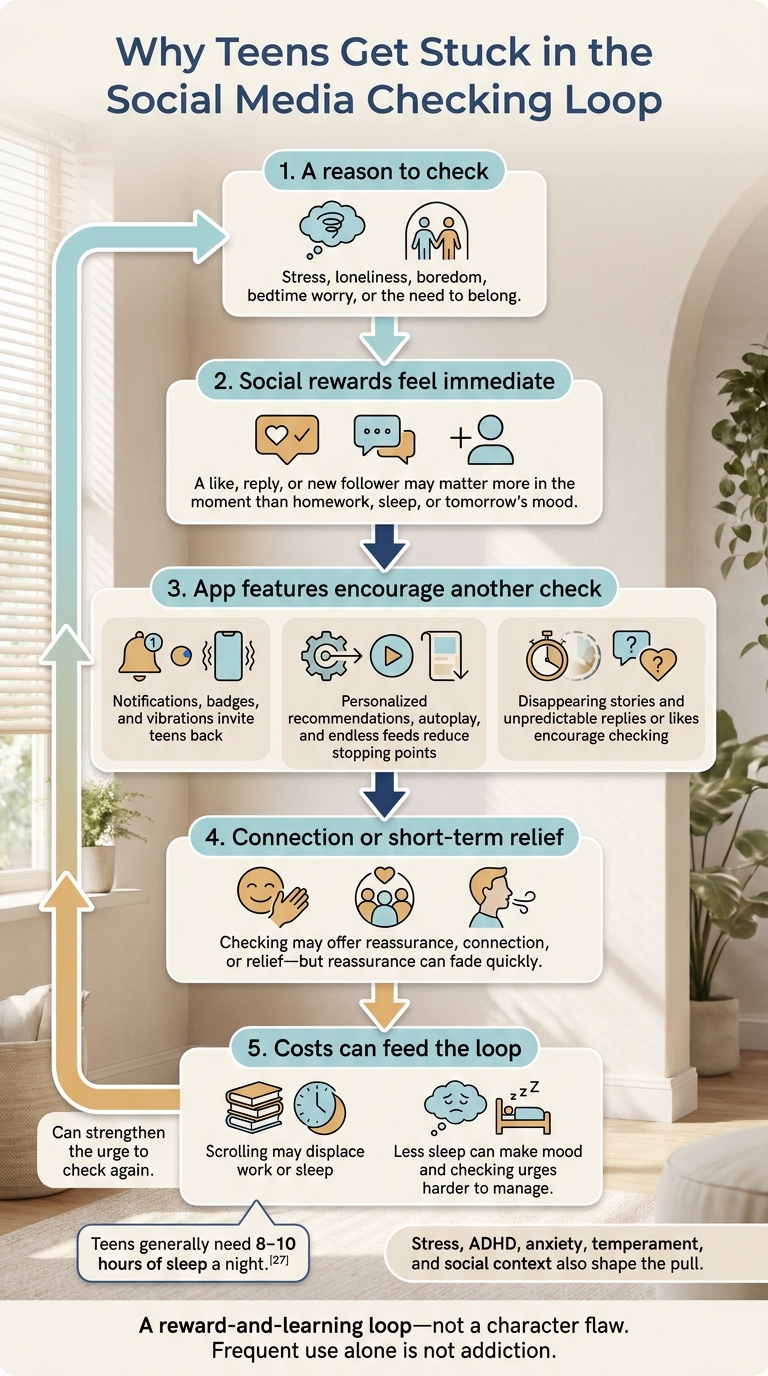
Why Teens Get Stuck in the Social Media Checking Loop
“I’ll just check once more” can turn into another stretch of scrolling when a teen’s need for connection meets an app designed to keep them engaged.
For teens, social rewards can feel immediate, while delayed costs carry less weight. A like, reply, or new follower may matter more in the moment than homework, sleep, or tomorrow’s mood. Stress, ADHD, anxiety, temperament, and social context also shape that pull.
Peer approval and the need to belong
Likes, read receipts, group-chat activity, and appearance-focused posts make acceptance and exclusion unusually visible. Checking can become a way to answer a pressing concern: whether you are still included. It serves a need for belonging, but the reassurance may fade quickly, leading to another check.
How notifications and endless feeds keep teens checking
Notifications, badges, and vibrations invite teens back; personalized recommendations offer something new. Autoplay and endless feeds remove natural stopping points, while disappearing stories create pressure to look before something is gone. Unpredictable replies and likes keep open the possibility that the next check will feel rewarding.
This is a reward-and-learning loop, not a simple chemical switch. Frequent use alone is not addiction, but use that feels hard to stop despite its costs is a problem. When checking becomes the easiest way to ease pressure, that relief can help keep the habit going.
The cycle of stress, scrolling, and lost sleep
Stress, loneliness, boredom, and bedtime worry can make scrolling feel like a way to get a little relief. That relief may come at the expense of work or sleep, leaving the next day harder to face.
Teens generally need 8–10 hours of sleep a night. Getting less can make mood and checking urges harder to manage, strengthening the pull of social rewards and immediate relief.
How therapy addresses checking without shame
“I check before I even realize I’m doing it.” Therapy treats that checking as information, not a character flaw. It addresses the habit while respecting the teen’s online relationships. The first step is to notice what happens just before the check.
Notice urges and choose what matters
Acceptance and Commitment Therapy (ACT) helps teens pause, notice an urge, and practice letting it be there without acting on it. The aim is to choose what to do next based on what matters to them, rather than impulse.
Therapy examines the same loop apps draw on: stress, the need to belong, and fast relief. A therapist can help a teen map the trigger, urge, check, payoff, and cost. From there, the teen can practice naming the urge, taking one breath, and choosing a small next step.
Finishing one homework question or contacting a trusted friend directly can be a chosen response, not a test of perfect self-control.
Match support to each teen’s needs
What prompts checking differs from teen to teen. ADHD, anxiety, OCD, depression, trauma, and body-image concerns can each shape the pattern. Assessment should examine those needs rather than assume social media caused every difficulty. The aim is not to stop all use, but to change the loop that keeps repeating.
Support might mean cues for switching tasks, tools for handling the need for reassurance, or muting certain content without cutting off healthy friendships. The change should be small enough to keep using, not an identical rule for every teen.
2 ways to spot triggers and pause checking
“I just need a break” or “Maybe they’ve replied” can be the moment checking begins. It may offer relief, connection, or a distraction. Start by noticing one pattern, not trying to reset every habit. Watch for when stress, boredom, or the need to belong turns into an automatic check, then use what you notice to test one small pause.
Keep a short trigger log
For 3–5 days, record one checking episode a day in a few words. Note the time and place, what happened just before, your feeling or body sensation, and what happened next. Include the immediate payoff and how you felt afterward. This doesn’t need to become another task you have to get right.
Look for one repeated cue:
Homework stress, waiting for a reply, seeing likes, loneliness, or bedtime worry.
Ask what you hoped checking would change. Once you have a pattern worth testing, stop logging.
Choose a pause that matches the trigger
Choose a pause that responds to what you needed in that moment.
Try a short walk for stress, a prepared drawing or puzzle for boredom, or direct contact with someone you trust for loneliness.
Start with a 5-minute delay, keeping the phone out of reach. Then decide whether to check. Build up to 10 minutes only if that feels within reach. The pause still counts if you check afterward.
If bedtime is the trigger, protect the last 30 minutes before bed with reading, a shower, silenced notifications, and a phone charging away from bed. Parents can agree on this boundary with their teen, follow it themselves, and review it after a few days. Keep the agreement open and respectful, without shame or secrecy. During that check-in, discuss what made the pause easier or harder.
When to seek more support
“I keep trying to stop, but I end up back in the same place.” If the same trigger keeps pulling a teen back after a pause, they may need more support. Look at sleep, mood, school, and safety rather than a screen-time cutoff. Persistent distress calls for help, not punishment.
Signs to discuss with a trusted adult or clinician
Pay attention when a teen repeatedly tries to cut back without success, loses sleep, or feels more sadness, irritability, anxiety, or hopelessness. Pulling away from friends or activities also matters, as do changes in attendance, focus, grades, or homework completion. These patterns are reasons to talk with a trusted adult or clinician, not a diagnosis.
Treat cyberbullying, self-harm content, eating concerns, and distress that continues as urgent. Ask directly about safety and self-harm. Block or report harmful accounts, and seek prompt professional support. In the U.S., call or text 988 for a mental health crisis. Call 911 if danger is immediate.
Teen therapy in Birmingham and online
Start with the change the teen wants most. Empower Counseling offers teen therapy in Birmingham and through telehealth across Alabama, with select clinicians also serving Tennessee. Therapists use Acceptance and Commitment Therapy (ACT) to help teens choose actions that fit their values.
With support in place, a teen can pick one small change to test this week.
Conclusion: Start with one small change
You open the app for a quick check, then find yourself checking again. Fast, unpredictable rewards can keep that loop going. It’s a pattern, not a flaw, and healthy online connection still matters.
This week, name one trigger and try one pause that fits the need behind it. Notice what happened just before you opened the app, then test another way to meet that need. Treat what happens during the pause as information, not a test you can fail.
Seek support if checking affects sleep, mood, school, relationships, or safety. Progress means noticing sooner and choosing your next step on purpose.
FAQs
How can I tell normal checking from compulsive use?
You pick up your phone to check one thing, then find yourself still scrolling while a task waits or bedtime slips past. The difference is purpose and impact: ordinary checking meets a specific need; compulsive checking feels automatic and gets in the way of daily life.
Notice what checking offers in that moment. It may bring a quick reward or a brief escape from a difficult feeling. That relief can come at a cost: lost time, unfinished responsibilities, or disrupted sleep.
At Empower Counseling, teens and adults can use Acceptance and Commitment Therapy (ACT) to practice noticing urges without shame or judgment. Mindfulness can create a pause between the urge and the action, giving you room to choose whether checking fits what matters to you.
How can I set phone limits without isolating my teen?
Making phones off-limits can turn them into the thing your teen wants even more. Rather than treating the phone as the enemy, invite your teen to help decide how and when to use it with purpose.
Keep the conversation centered on what you both want to protect: time together as a family, enough sleep, and in-person connections. Limits should support your teen’s growth and well-being, not just track minutes on a screen. Give them a voice in setting those limits so they can take ownership of their habits.
What if pausing makes my teen more anxious?
Your teen puts their phone down, but the urge to check it makes it hard to settle. If a pause from social media brings anxiety, their phone may have become a familiar way to get distance from stress or uncomfortable feelings.
Through Acceptance and Commitment Therapy (ACT) at Empower Counseling, teens practice viewing that anxiety as temporary and something they can work through, rather than a danger. Mindfulness helps them notice the urge to check without acting on it automatically. That pause gives them room to choose what matters to them instead of letting the urge decide.