
“I asked my teen to put the phone away, but minutes later, they’re checking again.” Social media algorithms can encourage repeated checking by serving posts based on past engagement, while features such as infinite scroll remove natural stopping points. I want to understand what keeps pulling my teen back, not just count screen time; this article helps me recognize when checking disrupts sleep or school and choose <u>one change to try together</u>.
"How to Train Your Algorithm?" | Eugenia Mitchelstein | TEDxUdeSA
sbb-itb-92e3c8f
How Algorithms Encourage Repeated Checking
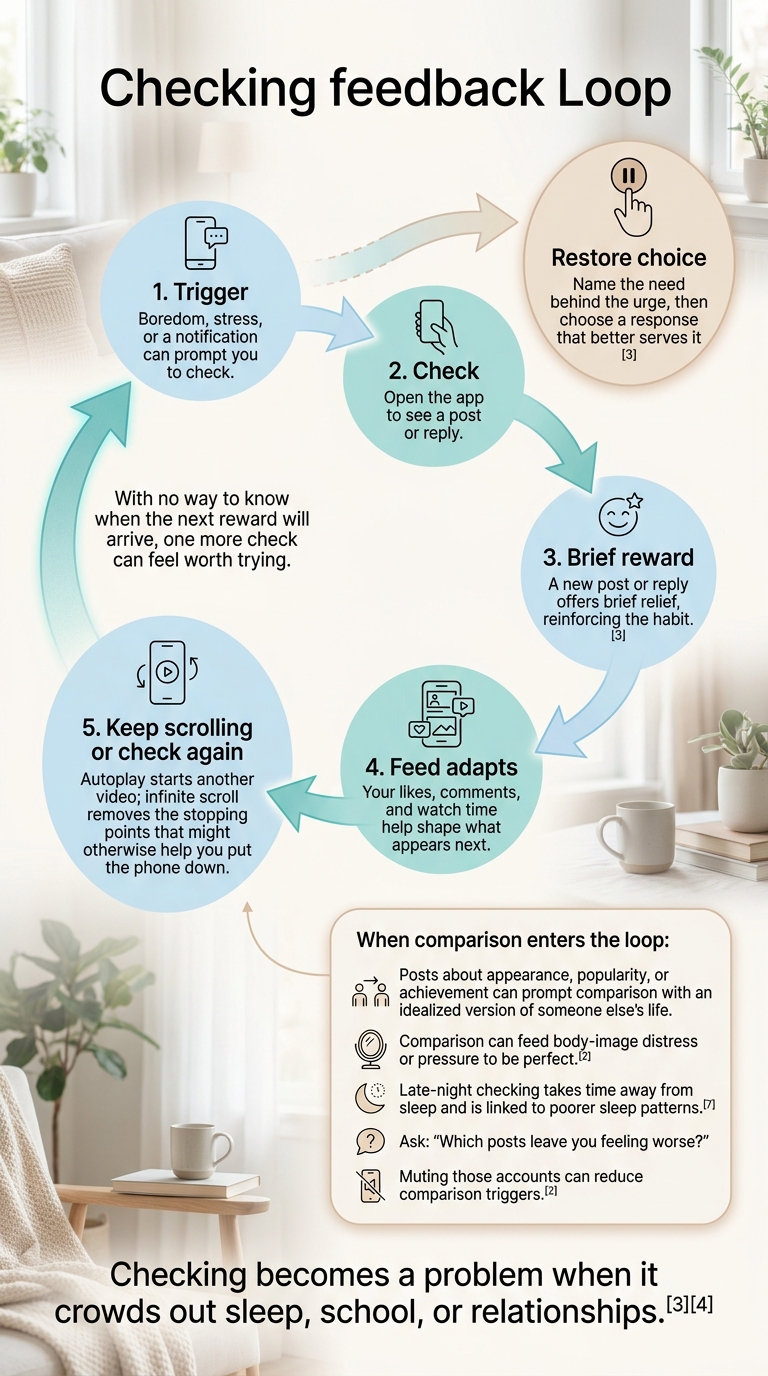
How Social Media Keeps Teens Checking
You put your phone down, then reach for it again, hoping there’s something new. That urge is not simply a failure of willpower. Recommendations favor content likely to hold your attention, while notifications invite you back. As Kathryn Ely, Founder and Therapist, Empower Counseling & Coaching, said:
"Uncertainty is painful and information is rewarding. So our brains try to predict."
Checking becomes a problem when it crowds out sleep, school, or relationships.
The Checking Loop: Trigger, Reward, Repeat
Boredom, stress, or a notification can prompt you to check. A new post or reply offers brief relief, reinforcing the habit. Your likes, comments, and watch time help shape what appears next. Autoplay starts another video; infinite scroll removes the stopping points that might otherwise help you put the phone down. With no way to know when the next reward will arrive, one more check can feel worth trying.
An Acceptance and Commitment Therapy (ACT) skill offers a pause between the urge and the action: name the need behind the urge, then choose a response that better serves it rather than checking immediately. The same triggers can also show up alongside mood swings, sleep loss, and more checking.
How Comparison Affects Mood and Sleep
A post about someone’s appearance, popularity, or achievement may leave you measuring your life against an idealized version of theirs. Connection can shift into comparison, feeding body-image distress or pressure to be perfect. Returning to posts that worsen your mood, or continuing to check past bedtime, can make the loop harder to break. Late-night checking also takes time away from sleep and is linked to poorer sleep patterns.
Ask:
“Which posts leave you feeling worse?”
Muting those accounts can reduce comparison triggers. You may find the pattern easier to recognize once you notice its effects on daily life.
Spot Early Signs of Lost Control
Your teen puts the phone down, then picks it up again, even after deciding to stop. When the feed keeps serving the same triggers, pay attention to whether they can step away. Time online alone does not signal a problem. Repeated loss of control, mood changes, and disruption to sleep, school, or relationships matter more than total minutes online.
High Use vs. Problematic Use
Look for a pattern of repeated checking, especially when it comes with strong urges, hidden use, or returning to posts that leave your teen upset. The distinction is not simply how long they spend on a screen, but what happens during and after that time.
| Area | High Use Without Clear Impairment | Possible Problematic Use |
|---|---|---|
| Control | Can stop for meals or bedtime. | Keeps checking after trying to stop. |
| Emotional response | Feels fine when access is limited. | Feels upset when access is limited. |
| Sleep | Does not regularly lose sleep. | Sleep is regularly cut short. |
| Relationships | Supports friendships. | Withdraws from in-person time or causes conflict. |
| Daily functioning | School and responsibilities stay on track. | Checking disrupts focus or grades. |
| Attempts to reduce use | Follows agreed limits. | Hides use, fails to cut back, or keeps returning to upsetting posts. |
These patterns are reasons for a conversation or assessment, not a label. Ask what happens when your teen tries to stop. Keep the focus on what repeats and how it affects their day.
Understand the Need Behind Checking
Opening the phone may be an attempt to find relief, connection, or a sense of belonging, even when the checking itself becomes harmful. Ask what your teen hopes will feel better after they check. Leave room for loneliness, conflict with peers, anxiety, or pressure to get everything right.
Acceptance and Commitment Therapy (ACT) can help teens interrupt the check-and-reward cycle by noticing an urge without treating it as a command. From there, ask which choice fits what matters most right now. If friendship matters, contacting a friend directly may serve that need better than scanning a feed.
The goal is more choice, so the next check is a decision rather than a reflex. Once the need is clear, your family can choose one boundary to test.
Make a Family Plan to Reduce Triggers
Once you can name what prompts your teen to check their phone, use that understanding to make one small change together.
Start with a shared goal, not another restriction. Checking may be a way to ease stress or stay connected, rather than simply a habit to stop. Agree on one boundary that adults will follow too. The aim is to interrupt the cycle in which a cue prompts checking and checking brings a reward.
Notice Feelings Before and After Scrolling
Invite your teen to notice what happened just before they checked and how they felt afterward. Keep the conversation gentle and open-ended, with room to talk about what need the app was meeting.
Let that need guide the next step. Restlessness might call for movement; feelings might need space through music or journaling. A need for connection might call for contacting a trusted person. Your teen does not have to wait for the feeling to pass before choosing an action that supports what matters to them.
Try One Boundary for One Week
You might say:
I’ve noticed scrolling is making sleep harder. What would help us try something different?
Test one change for seven days, tied to something your teen values, such as better rest or being present with friends. Adults should follow the same boundary, including putting their own phones away during shared time.
| Trigger or App Feature | Better Response |
|---|---|
| Nonessential notifications | Turn off notifications that aren’t needed. |
| Comparison-heavy feeds | Mute or unfollow comparison-heavy accounts. |
| Endless scrolling | Set a stopping point and choose a next activity. |
| Bedtime checking | Keep phones out of the bedtime routine. |
After one week, review sleep, mood, focus, relationships, and responsibilities. If the boundary was hard to follow, treat that as information, not a reason for shame or punishment. Adjust the plan with self-compassion. If the pattern does not improve, or safety or daily functioning is slipping, seek professional support.
When to Seek Professional Support
Your teen says they want to stop checking, but keeps reaching for the phone. If that pattern continues after your family has made changes, outside support can help interrupt it. An assessment can help identify what keeps pulling your teen back.
When Daily Life or Safety Is at Risk
Self-harm or suicidal thoughts require immediate assessment. If your teen has suicidal intent or cannot stay safe, do not wait for a therapy appointment. In the United States, call or text 988 for urgent crisis support. Call 911 for immediate danger. Routine therapy does not replace crisis care.
Seek help if your teen is losing sleep, struggling with grades or focus, or having trouble with mood or relationships. Support is also warranted when checking is tied to anxiety, depression, trauma, OCD, eating concerns, or body-image distress.
Teen Therapy in Birmingham and Across Alabama
Understanding what checking does for your teen allows treatment to address the need underneath it, rather than focusing only on phone use.
You can access teen therapy through Empower Counseling in Birmingham or via telehealth throughout Alabama. ACT and other evidence-based approaches can help teens notice urges, tolerate uncertainty, and choose responses that reflect what matters to them instead of automatically checking.
Services are private pay and out of network.
When you call, describe how checking affects your teen’s sleep, school, mood, and relationships. Those details help keep the conversation centered on your teen’s needs.
Conclusion: Break the Loop and Restore Choice
“I want to stop, but I keep checking.” Recognizing that loop gives you a place to begin. Checking can become automatic: trigger, reward, repeat. Name what comes before the urge, whether it’s boredom, stress, anxiety, or loneliness. When a teen keeps checking after wanting to stop, and sleep, mood, or schoolwork suffers, treat that pattern as a warning sign.
Start with one small change aimed at the trigger, rather than a total overhaul. For one week, try muting comparison-heavy accounts, with parents following the same rule. Before opening the app, pause to name what you want: connection, relief, or distraction. That pause can help you respond to the need behind the urge instead of reaching for the app automatically.
The goal is more choice, not all-or-nothing quitting. Watch for better sleep, steadier mood, and more focus. If one boundary doesn’t ease the pattern, seek help sooner rather than later to learn how to notice urges without acting on them. If the loop still feels stuck, teen therapy is available through Empower Counseling in Birmingham, in person and via telehealth across Alabama.
FAQs
Can my teen retrain their social media feed?
“I opened the app without thinking, and now I feel worse.” Teens can move from automatic scrolling toward intentional engagement that reflects what matters to them. Mindfulness, or paying attention without judgment, can help them notice what prompts unhealthy comparison or the urge to seek rewards through scrolling.
That awareness gives teens room to choose: mute accounts, unfollow content that feeds negative cycles, or take a planned break. These steps can help them regain control and bring their social media habits closer to their values. Empower Counseling supports teens as they work through these challenges.
How can I set phone boundaries without causing conflict?
You want time together without every quiet moment turning into scrolling. Start with what matters to you or your teen, not punishment. Connect phone boundaries to family time or mental well-being so there’s a clear reason for them, rather than a rule that feels arbitrary.
Practice mindfulness by noticing what prompts the urge to scroll. Pause before reaching for the phone, then choose a response that fits what matters to you.
If that feels difficult, Empower Counseling uses Acceptance and Commitment Therapy to support values-based habits for teens and families in Birmingham and across Alabama.
How can I tell if anxiety is driving my teen’s checking?
Your teen may check social media to quiet a worry, get relief from stress, or feel more in control when something feels uncertain. Anxiety may be driving the checking, with social media serving as a way to manage those feelings. Over time, checking may become an automatic response to worry or the need for certainty.
For teens working through these patterns, Empower Counseling in Birmingham, Alabama, offers support using Acceptance and Commitment Therapy.


