
How Past Experiences Shape Self-Beliefs
A sharp message arrives, and your stomach turns before you’ve finished reading it. A professor’s tone leaves your mind blank. A reminder of criticism brings shame or fear. Earlier experiences can train your brain to expect rejection before you know what the present situation means. That reaction may be an old survival response, not a reflection of what is happening now.Bullying, Criticism, and Shame
Bullying, exclusion, public humiliation, body shame, repeated criticism, family conflict, and harsh academic feedback can teach your brain to anticipate rejection.In college, even a brief request to talk from a professor can trigger that pattern.You don’t need a clear trauma history to develop low self-worth. Constant comparison and pressure to perform can also shape how you see yourself. Over time, painful experiences can shift from something that happened to you into something you believe about who you are.
Negative Beliefs About Worth and Belonging
Repeated hurt can settle into broad beliefs that reach beyond the events that shaped them:I am defective, unlikable, powerless, a failure, or I do not belong.Success in the present may not change those beliefs right away. Achievement and feeling safe are not the same thing. EMDR can target memories linked to shame, experiences of rejection, and the beliefs attached to those events. Perfectionism and people-pleasing may be ways your mind learned to prevent further criticism or rejection, rather than personal flaws. EMDR targets the memories that keep those beliefs feeling current.
sbb-itb-92e3c8f
How EMDR Treats Memory-Related Distress
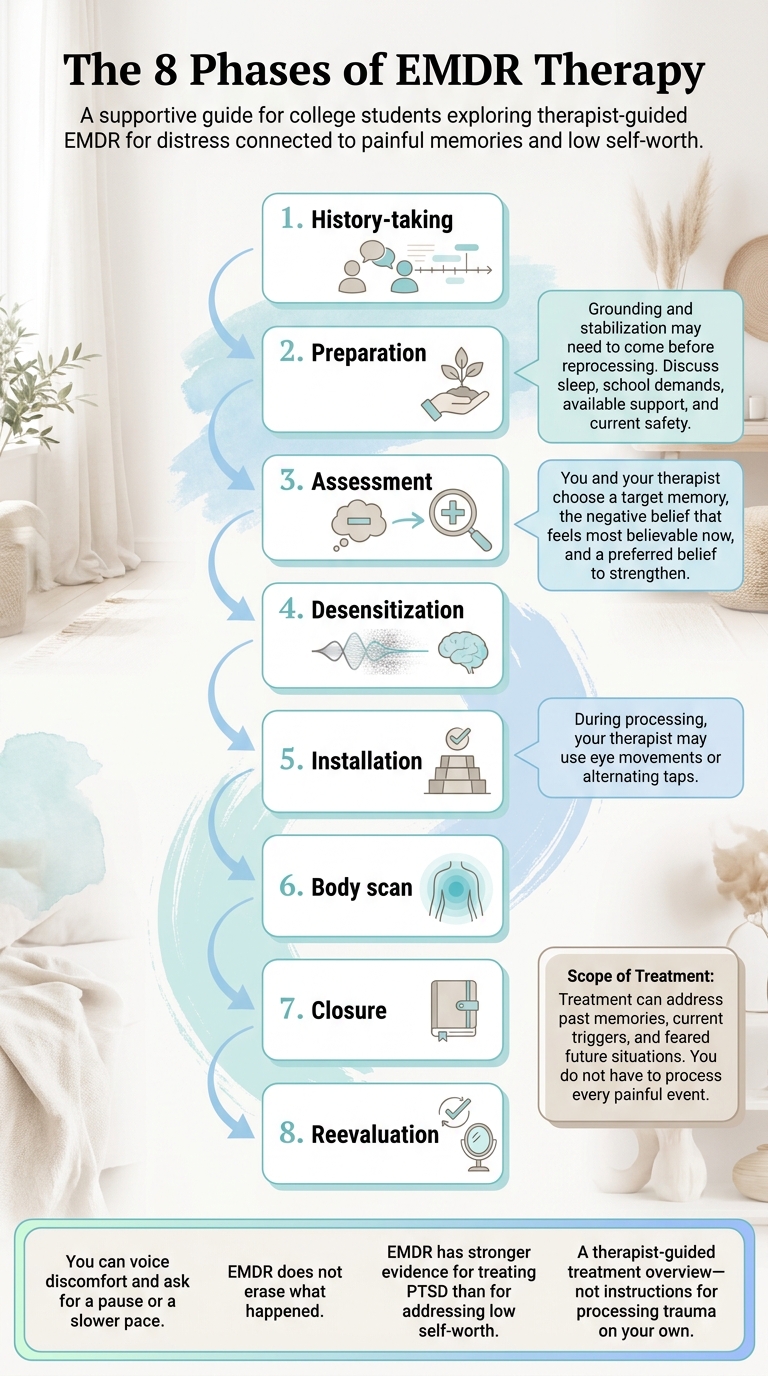
The 8 Phases of EMDR Therapy
The 8 Phases of EMDR
EMDR follows eight phases: history-taking, preparation, assessment, desensitization, installation, body scan, closure, and reevaluation. During processing, your therapist may use eye movements or alternating taps. Treatment can address past memories, current triggers, and feared future situations. You do not have to process every painful event.Choosing Memories and Beliefs to Address
You and your therapist choose memories connected to what troubles you now. These might involve bullying, harsh feedback, exclusion, or shame; the memory does not have to be your most extreme experience. During assessment, your therapist identifies the target memory, the negative belief that feels most believable now, and the preferred belief you want to strengthen. You can voice discomfort and ask for a pause or a slower pace. Preparation helps you approach reprocessing with support and attention to safety.Preparing for Safe EMDR Sessions
Preparation takes your current circumstances into account: dissociation or feeling disconnected, whether you are safe right now, substance use, sleep, school demands, and available support. Grounding and stabilization may need to come before reprocessing. If an exam is approaching, discuss session timing and make a plan for handling distress between appointments. Brief fatigue or strong emotions can happen. If you cannot stay safe, seek immediate emergency help. For crisis support in the U.S., call or text 988.EMDR Research: PTSD and Self-Esteem
EMDR has stronger evidence for treating PTSD than for addressing low self-worth. For college students, reprocessing may help reduce distress and support more balanced self-beliefs. That change may show up in how you participate in class, relate to others, or set boundaries.How Reprocessing May Affect Daily Confidence
“That feedback stayed with me all evening.” As reprocessed memories lose intensity, moments like this may begin to feel different. Feedback may feel less like a verdict on your worth, and your sense of worth may depend less on performance. Avoidance and shame may ease, leaving room for steadier self-worth. The goal is steadier action under stress, not constant confidence. Over-apologizing and perfectionism often serve as protection rather than reflecting personality traits.Goals for Classes, Relationships, and Boundaries
Progress might mean speaking in class, staying connected to friends, or making choices based on your values rather than fear. You and your therapist can choose concrete goals together:Attend office hours, receive constructive feedback, or tell a friend you need to study tonight and can’t talk.Acceptance and Commitment Therapy (ACT) can complement EMDR by helping you act on your values while discomfort is still present. You might track whether feedback feels less intense and whether you can return to studying instead of spending the evening replaying it.
Examples of Memory Targets and Treatment Goals
A present-day reaction may connect to an earlier experience of shame. The examples below show possible links, not fixed targets. Your therapist will choose what fits your history.
Memory target Negative belief Present-day trigger Possible treatment goal Childhood bullying during a presentation I am stupid/incapable Being called on in a seminar Participating in class discussions without physical panic Caregiver criticism regarding grades I am only worthy if I am perfect Receiving a B or constructive feedback Attending office hours to discuss a paper Public embarrassment in a social group I don’t belong A friend not replying right away Setting a boundary or initiating a social plan Academic setback or failed exam I am a failure/I have no future A difficult upcoming midterm Staying in the library to study instead of avoiding it
Therapist-Guided Practices Between Sessions
With your therapist’s guidance, practice noticing your reaction, naming what is happening now, and separating it from the past. This is grounding, not trauma processing on your own. These practices support treatment; they do not replace it. Choose one small action based on your values:Prepare a question for office hours, contribute to a class discussion, or set a boundary around study time.Small steps can help you bring EMDR gains into the week between sessions. Discuss changes in distress, sleep, and schoolwork with your therapist.


