“I’m still getting everything done, but I don’t know how much longer I can keep this up.” Burnout can develop in high achievers when work demands leave too little room for recovery, even while performance looks strong. The World Health Organization describes burnout as the result of chronic workplace stress that has not been successfully managed. This article explains how that strain can hide behind achievement and where to begin reducing the load.
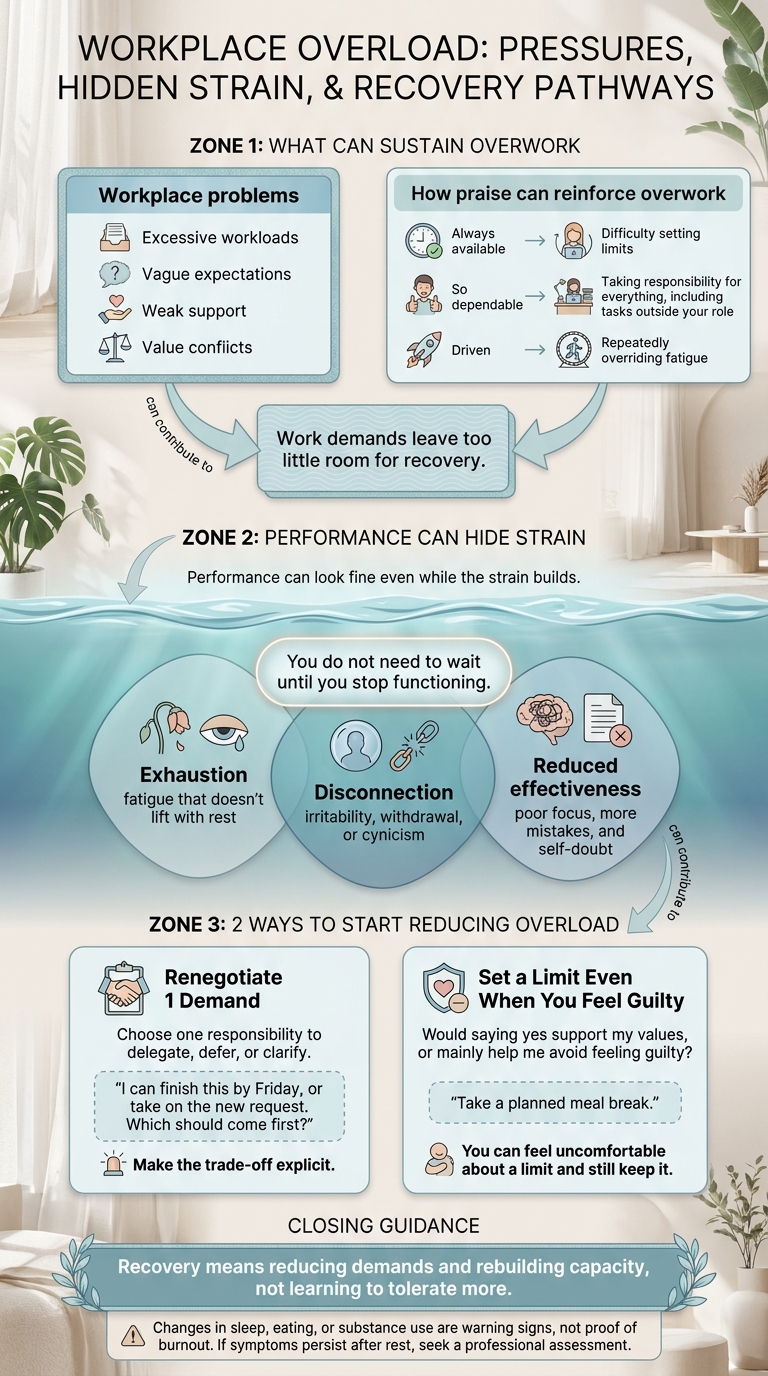
How Burnout Hides Behind High Performance
Disconnecting from Achievement Fatigue: Reclaiming Worth Beyond Success | Marilyn Shaw | TEDxSPC
sbb-itb-92e3c8f
How Overwork Can Lead to Burnout
I keep waiting for a quieter week, but I never feel caught up.
When rest stays out of reach, overwork can stop feeling temporary. Burnout refers to chronic workplace stress that has not been successfully managed, rather than a busy week or a short-term workload spike.
Pushing beyond your limits can lead to exhaustion, cynicism, and a reduced sense of effectiveness. These signs can overlap even while your performance still looks strong to others.
How Praise Can Reinforce Overwork
I worry that saying no will change how people see me.
Being someone others can count on may matter deeply to you. Praise, promotions, and approval can make overwork feel like the price of keeping that trust, reinforcing perfectionism, people-pleasing, and reluctance to delegate.
| Praise | Possible Hidden Cost |
|---|---|
| “Always available” | Difficulty setting limits |
| “So dependable” | Taking responsibility for everything, including tasks outside your role |
| “Driven” | Repeatedly overriding fatigue |
The same patterns that earn approval can leave less room for rest or limits.
Burnout Signs Behind High Performance
I’m finishing the work, but everything takes more out of me.
The first signs may appear in how work feels before others notice a change. Exhaustion can feel like fatigue that doesn’t lift with rest. Disconnection may show up as irritability, withdrawal, or cynicism, while reduced effectiveness can mean poor focus, more mistakes, and self-doubt.
Changes in sleep, eating, or substance use are warning signs, not proof of burnout. If symptoms persist after rest, seek a professional assessment. Ask a medical clinician about persistent fatigue, headaches, or digestive changes, since other conditions can cause similar symptoms.
Why High Achievers Push Past Their Limits
I can finish the work, but I don’t know how to let myself stop.
Taking on too much can become a learned way to feel safe. If working harder once helped you avoid criticism or uncertainty, stepping back may feel riskier than pushing through. That pattern served a purpose. It is not a flaw.
But overload is not always a personal pattern. Excessive workloads, vague expectations, weak support, and value conflicts are workplace problems. Self-care cannot make those conditions reasonable. In a workplace that rewards endless availability, doing more than your share can conceal a workload that no one can keep up with and make setting limits feel unsafe. Guilt during time off may reflect a rule you have learned to follow, rather than a reasonable demand.
Why Setting Boundaries Can Be Hard
If I disappoint someone, I feel like I’ve done something wrong.
If you see yourself as the person others can always count on, setting a limit can feel like letting them down. That feeling does not mean your boundary is wrong.
Write down what someone is asking of you and what you fear will happen if you say no. Then use Acceptance and Commitment Therapy (ACT) to practice noticing the thought without treating it as an instruction:
“I am having the thought that I am failing them.”
Naming the rule gives you a place to begin testing a smaller limit.
2 Ways to Start Reducing Overload
“I can keep getting things done, but I can’t keep doing this much.” The next step is not more endurance; it is less overload. Recovery means reducing demands and rebuilding capacity, not learning to tolerate more. If the workload remains too much, expectations need to change, or you may need accommodations or added support.
Renegotiate 1 Demand
Doing your job well can hide how much it costs you. Write down what fills your workday, including the emotional labor of keeping others comfortable. Ask:
“Which responsibility has an unclear priority, could be shared, or involves a standard I would never expect from someone else?”
Choose one responsibility to delegate, defer, or clarify. To make competing priorities visible, try:
“I can finish this by Friday, or take on the new request. Which should come first?”
Make the trade-off explicit rather than quietly taking on more work. Where possible, agree on a realistic stopping time or protect one uninterrupted break.
Set a Limit Even When You Feel Guilty
I feel guilty before I’ve even said no.
If you’re used to keeping others happy, doing less can bring up learned guilt. That pressure may be familiar without being a direction you have to follow. Acceptance and Commitment Therapy (ACT) helps you notice it without obeying it, then choose an action based on your values. Ask:
“Would saying yes support my values, or mainly help me avoid feeling guilty?”
Let care for your health or relationships guide one small action:
Take a planned meal break.
You can feel uncomfortable about a limit and still keep it. Meals, sleep, movement, connection, and rest are support, not performance goals. If protecting them feels impossible, the demands themselves need attention, not just your response to them.
Take Warning Signs Seriously
“I’m still getting everything done, but I’m exhausted.” You may notice irritability, less motivation, or guilt whenever you rest. When guilt and difficulty setting limits have not been enough to prompt a change, let these warning signs be your cue to reduce demands, not a reason to blame yourself. Signs of burnout can mean that the way you have been coping is no longer working. Set realistic limits before daily functioning begins to slip.
For high achievers, performance can look fine even while the strain builds. You do not need to wait until you stop functioning. If the signs persist after rest and reduced demands, seek help.
When to Seek Professional Support
Persistent exhaustion, trouble functioning, or intense guilt about boundaries are reasons to seek professional support. Therapy can help you identify what is driving these patterns and what needs to change.
Seek prompt help for major mood changes or substance misuse. For thoughts of self-harm, call or text 988 in the U.S. For immediate danger, call 911.
Therapy in Birmingham and Across Alabama
Your needs can guide the choice of therapy. Empower Counseling, a women-centered practice in Birmingham, offers Acceptance and Commitment Therapy (ACT), Internal Family Systems (IFS), and EMDR as appropriate to your needs.
You can attend in person in Birmingham or through telehealth throughout Alabama. The practice is private-pay, out-of-network. You can request a free consultation to learn whether the practice is a fit.
FAQs
How can I tell burnout from depression?
You feel drained, find yourself caring less, and wonder whether your effort makes any difference. After prolonged, excessive stress, that pattern can point to burnout, which involves emotional exhaustion, cynicism, and feeling ineffective. Depression is a broader clinical condition, and burnout can lead to it.
If hopelessness persists, you have thoughts of self-harm, or physical symptoms of stress disrupt daily life, seek professional support. At Empower Counseling in Birmingham, Alabama, evidence-based therapy can help you understand these patterns and determine the best path forward.
How do I discuss burnout without seeming incapable?
“I can keep getting things done, but it’s costing me.” Talking about burnout means naming that physical and emotional cost, not admitting that you’re incapable. Doing more than you have the resources to support over time can leave you depleted. The demands have exceeded your resources, not your ability.
Frame the conversation around what it takes to do your work without exhausting yourself. Naming your limits can help you protect your energy, stay engaged in work you care about, and be present for the people who matter to you.
What if setting boundaries puts my job at risk?
Saying no to another assignment can feel like putting your job, or your sense of worth, on the line. If you measure your worth by how much you get done, managing your workload also means looking at the patterns that make setting limits feel unsafe. Perfectionism may be part of that pressure: caring about your work can become a demand to never fall short.
At Empower Counseling, Acceptance and Commitment Therapy (ACT) offers a way to work on separating your self-worth from your job performance. The focus is on helping you make decisions guided by your values, rather than fear of falling short or losing your position.