
I keep saying I want to move on, but my body acts like it just happened. If that sounds like me, this article is about why infidelity can leave my mind and nervous system stuck on alert, and how betrayal trauma therapy can help me feel steadier again. Yes, therapy can help after infidelity, especially when the pain shows up as panic, checking, intrusive thoughts, and loss of trust in my own judgment.
What stands out here is simple: my reactions are not proof that I am falling apart. They often make sense after deception, and treatment such as EMDR and ACT can help lower the alarm and rebuild self-trust. In one study on Acceptance and Commitment Therapy after marital infidelity, participants showed gains in forgiveness and post-traumatic growth over time.
Bound By Our Attachments: Race, Gender, and the Trauma of Violence – Session Preview
sbb-itb-92e3c8f
This may be more than heartbreak
You may look fine from the outside and still feel like your body never got the memo that the crisis is over. Your mind keeps circling. You check, replay, brace, scan. If infidelity or repeated lying has left you stuck in survival mode, this may be betrayal trauma, not just heartbreak.
What betrayal trauma means after infidelity
Betrayal trauma is a trauma response that can happen when trust is broken inside a primary relationship. After infidelity, it can show up in ways that feel hard to explain if you’re trying to tell the story in plain terms: intrusive images, panic, shutting down, and thoughts that will not let go. Those reactions can feel alarming. They are not proof that you are falling apart. They are signs that something deeply destabilizing happened.
Why your reactions make sense
The checking. The replaying. The emotional walls. These are not random or irrational. They are protective responses, your mind and body trying to keep you safe after your sense of reality has been shaken by deception. If lying has been happening over time, your nervous system may keep acting as if the next hit is still coming, instead of settling back down.
That pattern has meaning.
Your reactions are information, and they are treatable.
Which is why healing has to do more than revisit the relationship story. It also has to help your nervous system settle and help you trust your own read on what is happening again.
Your mind is not broken – it is trying to protect you
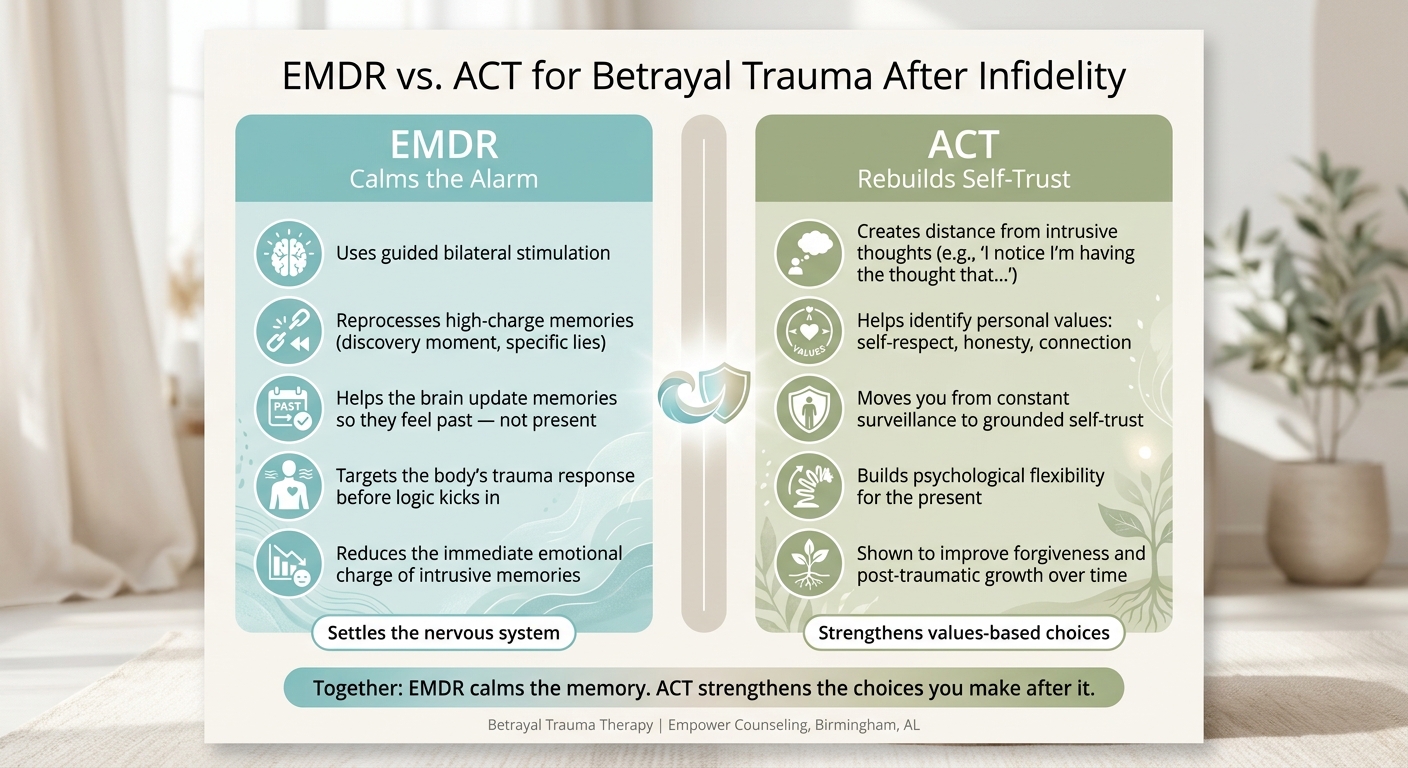
EMDR vs ACT for Betrayal Trauma After Infidelity
You may find yourself checking phones, replaying conversations, or jolting into panic before your thinking mind can catch up. Those reactions can feel exhausting, even a little humiliating. But they are not signs that something in you has gone wrong. They are signs that your nervous system learned, with good reason, to stay watchful after betrayal.
The problem is not that your mind tried to protect you. The problem is what that level of protection starts to cost you. Sleep gets thin. Ordinary moments feel loaded. Your body reacts as if the danger is still in the room. Therapy here is not about proving you should be over it. It is about helping your system stand down once the threat has passed.
How EMDR stops the nervous system from reacting to it as current
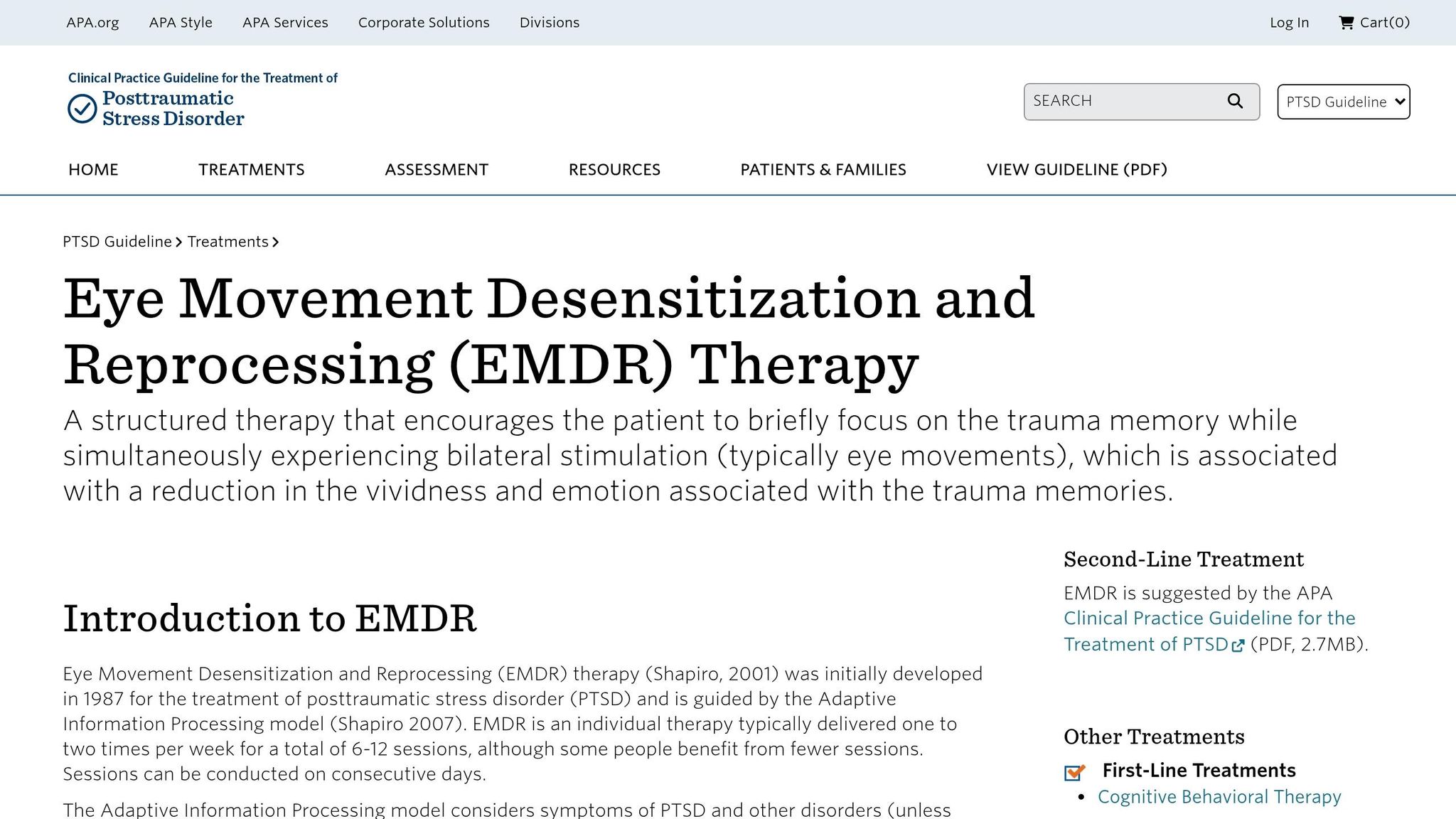
EMDR uses guided bilateral stimulation to help the brain reprocess the discovery moment, specific lies, or other memories with high emotional intensity so they feel past, not present. The memory remains, but it no longer carries the same immediate charge.
That shift matters because your body often reacts before your logic does. You may know, on paper, that the event is over, while your chest, stomach, and skin still behave as if it is happening again. EMDR works at that level, helping the nervous system update the memory so it no longer lands like a live threat.
Once the body is less activated, the next task is learning how to trust your own judgment again.
How ACT helps you rebuild self-trust
ACT does not try to eliminate intrusive thoughts or talk you out of self-doubt. Instead, it gives you more room to choose your response. Rather than being pulled under by "I should have seen this coming", ACT helps you notice, "I’m having the thought that I should have seen this coming." That small shift creates space. It loosens the grip of the thought without asking you to pretend it is not there.
From that steadier place, ACT helps you name what matters to you now: self-respect, honesty, connection. Those values become a compass when your mind wants to pull you back into constant surveillance. The aim is not blind trust. It is a grounded kind of trust in your own ability to notice, decide, and respond. ACT helps you move from surveillance to self-trust.
Why EMDR and ACT often work well together
EMDR and ACT address different layers of the same wound. EMDR helps your body stop reacting as if the betrayal is still happening. ACT helps you make values-guided choices while trust rebuilds.
In plain terms, one helps turn down the alarm. The other helps you live with more steadiness while your confidence in yourself comes back online.
As the charge drops, the first changes are often small but real.
What healing can look like in real life
Once the alarm in your body starts to soften, you may notice change in quiet ways before you have words for it.
Small shifts you can actually feel
Often, the first signs are physical. Your shoulders are not braced all day. Your chest feels less tight. Sleep comes a little more easily. Something reminds you of what happened, and instead of being swept away, you notice the wave, feel it move through, and see that it passes.
These are small shifts. They matter. They can be the first signs that your trauma response is easing.
You may also notice that the urge to check starts to lose some of its force. There is a longer pause between the feeling and the action. Intrusive thoughts may still show up, but they can feel shorter, less consuming, less like they take over the whole room.
Research on ACT after marital infidelity has shown gains in forgiveness and post-traumatic growth that hold over time.
Therapy that fits this kind of trauma
For this kind of hurt, good therapy does not begin by pushing you to relive everything at once. It begins with steadiness. With pacing. With helping you feel safer in your own body and clearer in your own mind.
Trauma-informed therapy starts with stabilization and pacing. The aim is not only less distress. It is being able to trust your own mind again.
EMDR and ACT compared
This is where the two approaches part ways most clearly. After infidelity, EMDR helps your body stop reacting as if the past is still happening, while ACT helps you meet the present with more steadiness.
EMDR calms the memory. ACT strengthens the choices you make after it. Together, they can offer both relief and direction.
Conclusion: What becomes possible after the shock begins to settle
At first, it can feel like your body is living in a different time than the rest of your life. Part of you knows the event is over. Another part still braces for impact. That split is exhausting.
Trauma-focused therapy is meant to help with that. Not by erasing the past, but by loosening its grip on the present. Healing from betrayal trauma can help you feel steadier inside yourself again, even while the larger relationship questions are still unsettled.
Those reactions are not random. They reflect a nervous system trying to protect you. Once your system no longer treats the betrayal as an active threat, therapy can help you rebuild how you respond.
EMDR helps settle the alarm, so the memory loses some of its present-tense charge. ACT supports values-based choices and builds psychological flexibility, so you can stay connected to what matters even when hard thoughts are still there. ACT has also been shown to improve forgiveness and post-traumatic growth after marital infidelity. What can start to open up is a steadier sense of self, clearer boundaries, and a more accurate read on what you know and what you need.
If you want that kind of support locally, here is one option in Alabama. If you’re in Alabama and want individual support after infidelity, Empower Counseling offers ACT and EMDR in Birmingham and via telehealth statewide. The practice is private pay and out-of-network.
FAQs
How do I know if this is betrayal trauma?
Your mind may keep circling the same questions: How did I miss this? Can I trust my own read on people anymore? Was any of it real? That kind of inner shaking is not a personal failing. It is what can happen when someone you depended on for honesty and safety becomes the source of deception instead.
Betrayal trauma is a predictable nervous system response to lost safety, not a character flaw. The ground can start to feel unstable. You may doubt your intuition. You may feel split between what you thought was true and what you now know.
Common signs can include intrusive thoughts, panic, hypervigilance, shutdown, sleep problems, checking behaviors, and a loss of self-trust.
How long does healing after infidelity take?
There isn’t a set schedule for healing after infidelity. For some people, the first days feel foggy and unreal. For others, the shock gives way to anger, panic, or a kind of numb functioning that looks fine from the outside and feels anything but fine on the inside. Pushing yourself to “get over it” too soon can backfire.
In therapy, the first focus is often stabilization. Not fixing everything at once. Not forcing forgiveness. Not rushing big decisions before your body and mind have had a chance to catch up to what happened.
That early work is usually about safety and pacing. It can mean helping you feel more grounded in your day, making sense of what you know and don’t know, and rebuilding your sense of reality after a betrayal has shaken it. From there, healing often starts with your relationship to yourself: your sense of safety, your ability to trust your own judgment, and your right to move at a pace shaped by your needs and readiness.
Can therapy help if I stay in the relationship?
Yes. Therapy can help whether you stay or leave.
After betrayal, the first problem often isn’t the relationship decision. It’s that your body no longer feels like a safe place to live in. Your mind scans for clues. Sleep gets thin. Small things hit hard. Healing from betrayal trauma starts there: calming your nervous system, rebuilding self-trust, and helping you feel steady enough to know what you know.
Individual, betrayal-informed therapy gives you room to process what happened at your own pace, without having to sort your pain around someone else’s timeline. That matters. In the early stages of trauma, pressure to "figure it out" can make people feel less settled, not more.
Approaches like ACT, EMDR, and Internal Family Systems (IFS) can help in different ways. ACT supports psychological flexibility and values-based healing, a model developed by Steven C. Hayes and colleagues to help people make room for painful inner experiences without letting those experiences run the whole show. EMDR, developed by Francine Shapiro, is used to process distressing memories so they carry less charge over time. Internal Family Systems, developed by Richard Schwartz, helps people work with the parts of themselves that feel panicked, numb, watchful, or torn, often with more self-understanding and less shame.
The point is not to rush you toward staying or leaving. It’s to help you feel more grounded, more clear, and more able to trust your own mind again.